If you are a landlord in Sussex, the answer is straightforward: yes, you are legally required to have a gas safety certificate for every property you rent out. If you are a homeowner, it is not a legal requirement, but there are very good reasons why you should consider getting one. Here is everything you need to know about gas safety certificates, what they cost, what is checked, and how often you need one.
What is a gas safety certificate?
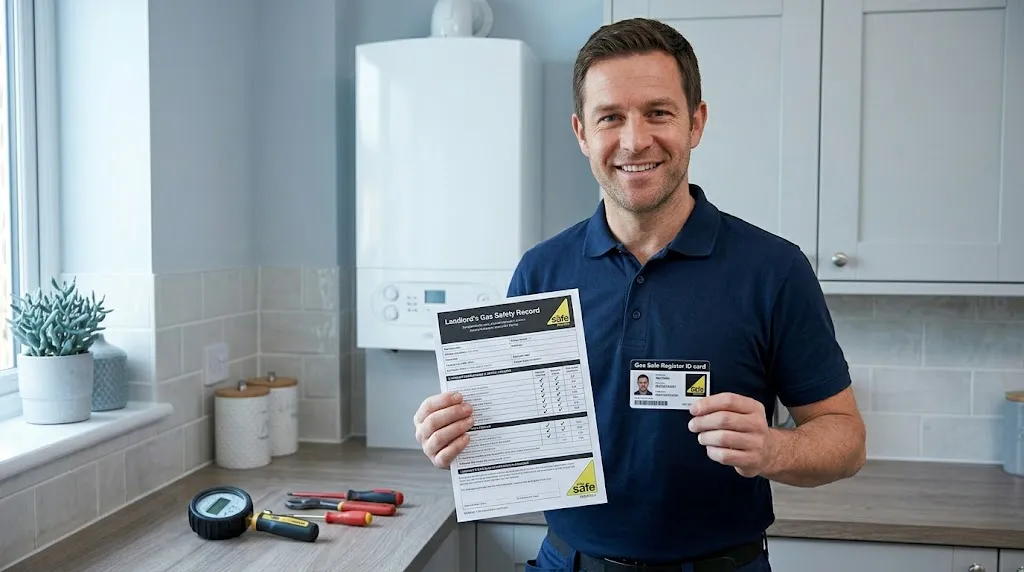
A gas safety certificate, officially known as a CP12, is a document issued by a Gas Safe registered engineer after they have inspected all the gas appliances, pipework, and flues in a property. The certificate confirms that everything has been checked and is safe to use. It records details of the appliances inspected, any defects found, and the results of the safety tests.
The inspection covers every gas appliance in the property, including the boiler, gas hob, gas fire, and any other gas-fuelled equipment. The engineer also checks the associated pipework and flues to ensure there are no leaks, blockages, or other safety issues.
Legal requirements for landlords
Under the Gas Safety (Installation and Use) Regulations 1998, landlords in England and Wales are legally required to:
- Have all gas appliances, fittings, and flues in rented properties checked by a Gas Safe registered engineer every 12 months
- Keep a record of each safety check for at least two years
- Provide a copy of the gas safety certificate to existing tenants within 28 days of the check, or to new tenants before they move in
Failure to comply is a criminal offence. Penalties can include fines of up to £6,000 per breach, and in serious cases, imprisonment. More importantly, a faulty gas appliance poses a real risk to your tenants' lives. Carbon monoxide poisoning kills around 30 people in the UK every year and hospitalises many more.
If you are a landlord in Sussex with properties in Brighton, Eastbourne, Worthing, Crawley, or anywhere else in the county, this is not optional. It is the law.
Do homeowners need a gas safety certificate?
There is no legal requirement for homeowners to hold a gas safety certificate. You will not be fined or prosecuted for not having one. However, an annual gas safety check is strongly recommended for several important reasons:
Safety
The primary reason is protecting your family. Carbon monoxide leaks from faulty boilers, gas fires, or poorly maintained flues are a genuine risk. Carbon monoxide is colourless and odourless, which means you will not know it is there until symptoms appear — headaches, dizziness, nausea, and in severe cases, loss of consciousness or death. An annual gas safety check identifies problems before they become dangerous.
Insurance
Some home insurance policies require evidence that gas appliances have been regularly maintained and checked. If you need to make a claim related to a gas appliance — a boiler leak that damages a ceiling, for example — your insurer may ask whether the appliance was regularly serviced. An annual gas safety check provides that evidence.
Property sales
If you are selling your home, having a recent gas safety certificate can provide reassurance to buyers and their solicitors. It is not a legal requirement for the sale, but it demonstrates that the gas appliances have been properly maintained and are safe.
Boiler warranty
Most boiler manufacturers require annual servicing to keep the warranty valid. While a gas safety check and a boiler service are not identical, many engineers offer both together, which covers all bases efficiently.
What does a gas safety check include?
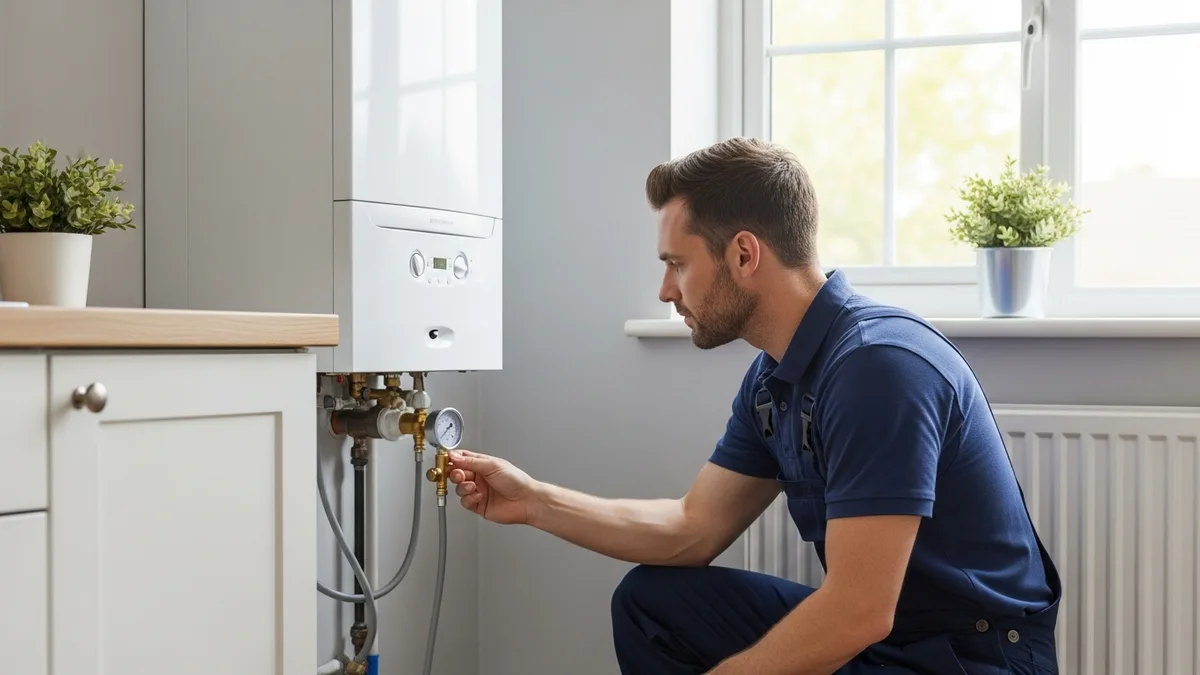
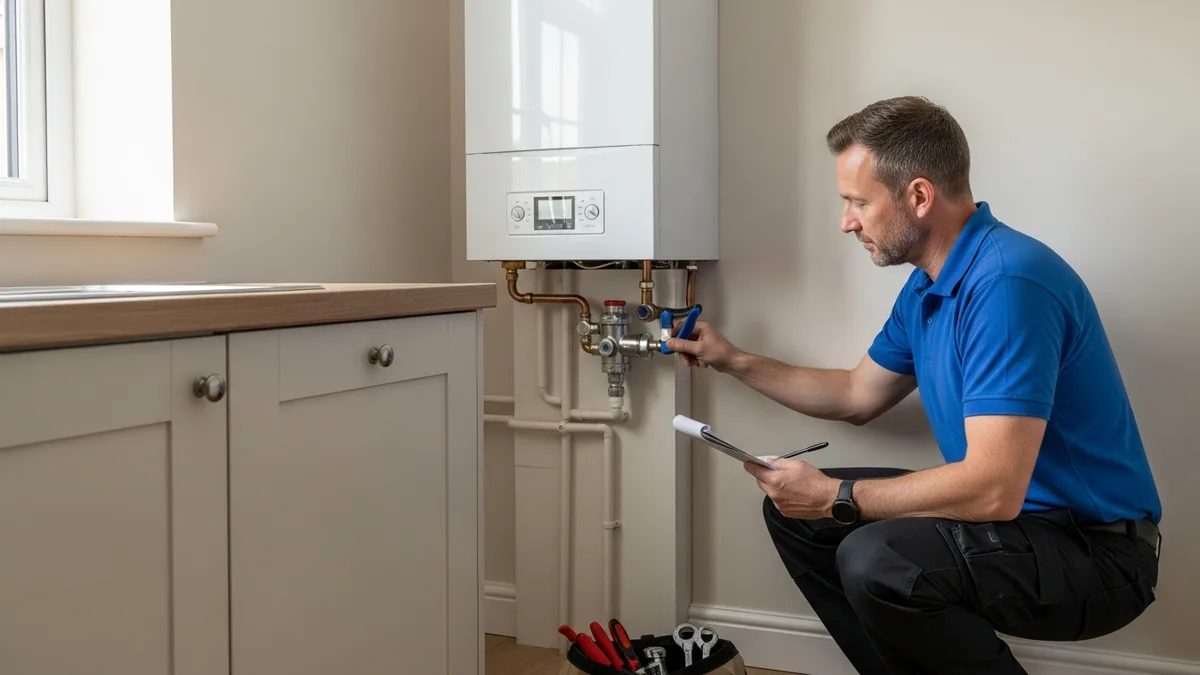
During a gas safety inspection, the Gas Safe registered engineer will check:
- Gas appliances: Testing each gas appliance to confirm it is working safely and efficiently, including the boiler, gas hob, gas fire, and gas water heater
- Flues and ventilation: Checking that flues are clear, unobstructed, and correctly installed, and that there is adequate ventilation for each appliance
- Gas pipework: Inspecting visible gas pipework for signs of damage, corrosion, or leaks
- Operating pressure: Checking that gas is being supplied to each appliance at the correct pressure
- Safety devices: Verifying that safety devices such as flame failure devices are functioning correctly
- Combustion analysis: Measuring flue gases to confirm the appliance is burning gas safely and completely
If the engineer finds a fault that poses an immediate danger, they are required to disconnect the appliance and classify it as either At Risk or Immediately Dangerous. You will be notified of the issue and advised on what action is needed.
How much does a gas safety certificate cost in Sussex?
A gas safety inspection in Sussex typically costs between £60 and £90 for a standard property with one or two gas appliances. If you have additional gas appliances — a gas fire in the living room or a gas hob in the kitchen alongside the boiler — the cost may be slightly higher to cover the additional inspection time.
Many engineers and companies offer a combined gas safety check and boiler service at a reduced rate, typically between £80 and £130. This is often the most cost-effective approach, as it covers both the safety certificate and the more detailed boiler service in a single visit.
How often do you need a gas safety certificate?
For landlords, the legal requirement is every 12 months. The check must be carried out within 12 months of the previous one, and the new certificate must be issued before the old one expires.
For homeowners, an annual check is recommended but not legally mandated. Booking your gas safety check at the same time each year — many people find it easiest to do it in summer when engineers are less busy — helps ensure it does not get forgotten.
Who can issue a gas safety certificate?
Only a Gas Safe registered engineer can carry out a gas safety inspection and issue a CP12 certificate. Gas Safe is the official registration body for gas engineers in the UK, having replaced the old CORGI scheme in 2009. Before allowing anyone to work on your gas appliances, ask to see their Gas Safe ID card. Every registered engineer carries one, and you can verify their registration number on the Gas Safe Register website.
Any person who works on gas appliances without Gas Safe registration is breaking the law, and their work could be dangerous. This applies whether you are a homeowner or a landlord.
FAQ
Is a gas safety certificate the same as a boiler service?
No, they are different, although there is some overlap. A gas safety check focuses on confirming that all gas appliances are safe to use. A boiler service is more thorough and includes performance testing, efficiency checks, and internal component inspection. Many engineers offer both together for convenience and cost savings.
What happens if a landlord does not have a valid gas safety certificate?
A landlord without a valid gas safety certificate is committing a criminal offence. Penalties include fines of up to £6,000 per offence and potential imprisonment. More importantly, if a tenant is harmed by a faulty gas appliance that was not properly checked, the landlord could face manslaughter charges. It is simply not worth the risk.
Can I use my gas safety certificate as proof of a boiler service for warranty purposes?
Not usually. Most boiler manufacturers require a dedicated boiler service for warranty purposes, which is more detailed than a standard gas safety check. If you need both, ask your engineer to carry out a combined service and gas safety check in a single appointment.
How long does a gas safety check take?
A standard gas safety check for a property with one boiler and one or two other gas appliances typically takes 20 to 30 minutes. If there are multiple gas appliances or if issues are found during the inspection, it may take longer.
Do I need a gas safety certificate to sell my house?
There is no legal requirement to have a gas safety certificate when selling a property as a homeowner. However, buyers and their solicitors may request evidence that gas appliances are safe, and having a recent certificate can help the sale proceed smoothly. It is a small investment that can prevent delays during the conveyancing process.
Whether you are a landlord needing a CP12 certificate or a homeowner who wants peace of mind, Platinum Boilers provides gas safety checks, boiler servicing, and new boiler installations across the whole of Sussex. We cover Brighton, Eastbourne, Worthing, Crawley, Hastings, and everywhere in between. Get in touch to book a gas safety check or to discuss your boiler needs with our friendly team.